2026-03-07 · Iran
Iran’s Armed Forces — Regulars, IRGC, and Counting Rules
Iran’s public force-size totals depend heavily on whether Islamic Revolutionary Guard Corps formations are counted with the regular Artesh.
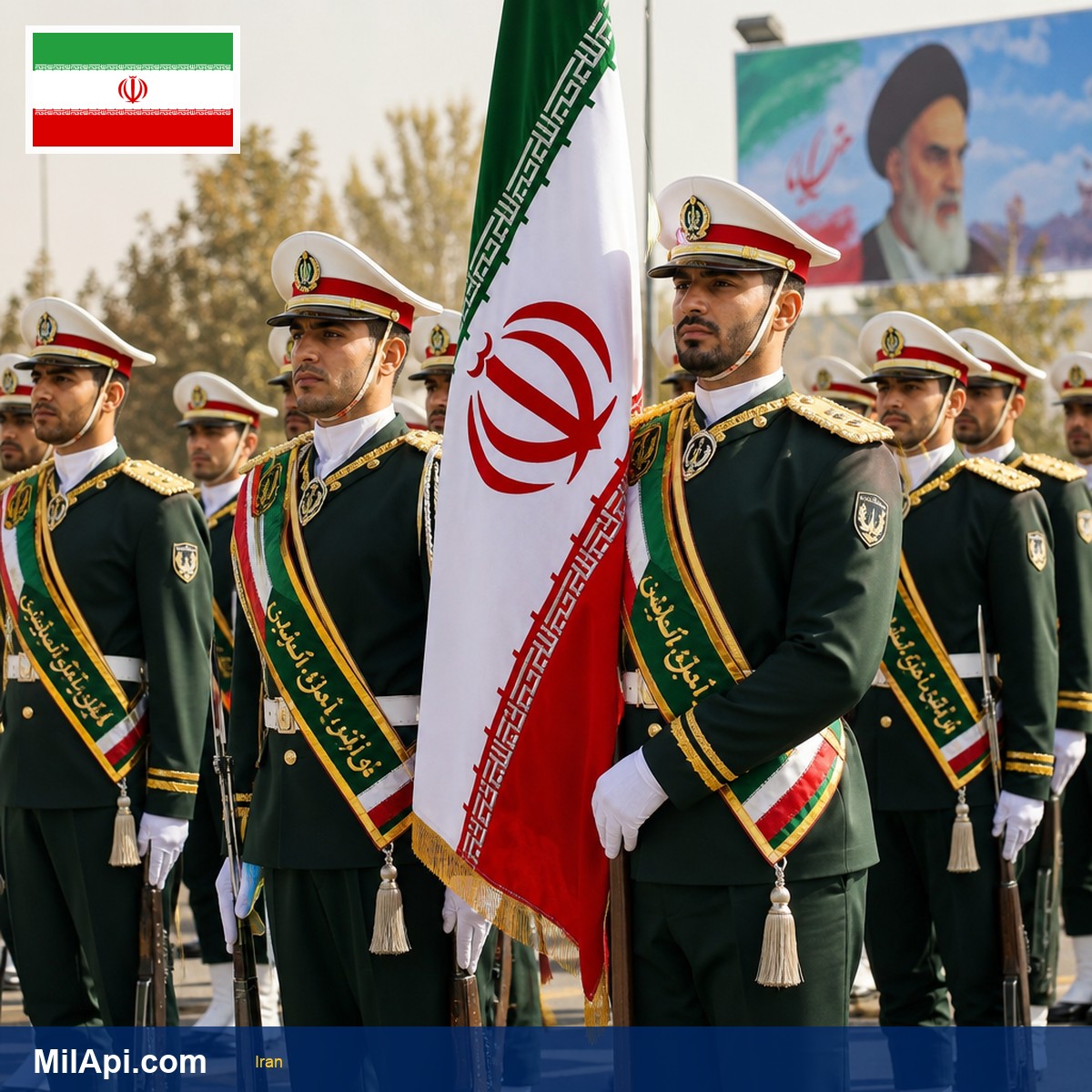
Iran’s place among the world’s larger militaries in open rankings depends on counting rules. The regular military (Artesh) and the Islamic Revolutionary Guard Corps (IRGC) are parallel structures. Some public tables sum both; others list them apart. Basij militia estimates add another layer of uncertainty when mobilization potential is conflated with standing active strength.
For apples-to-apples comparison with China, the United States, or Egypt, state explicitly whether IRGC ground, naval, and aerospace forces are included. Excluding them understates Iran’s organized armed capacity; including loosely affiliated militia pools can overstate ready combat power.
Asymmetric capabilities—missiles, drones, naval denial concepts in adjacent waters—feature prominently in open analysis and may matter more for regional scenarios than raw infantry numbers. That does not make end strength irrelevant; it means size is one input among many.
Regional influence networks sometimes appear in media as force multipliers. Those relationships are not the same as domestic active personnel and should not be added into a “force size” integer.
MilApi.com encourages transparent methodology: cite the split between Artesh and IRGC, date the estimate, and keep proxy dynamics in a separate narrative. Pair this post with conflict theater maps for geographic context.
Sources & disclaimers
Public estimates only. IISS-style yearbooks, Wikipedia aggregates, and government releases can disagree on definitions (active vs reserve, paramilitary inclusion). Always verify with primary publishers.
- Wikipedia: Islamic Republic of Iran Armed Forces / IRGC (estimate ranges)
- Open analyses distinguishing Artesh and IRGC
- Public reporting on regional proxy networks (not equivalent to domestic end strength)