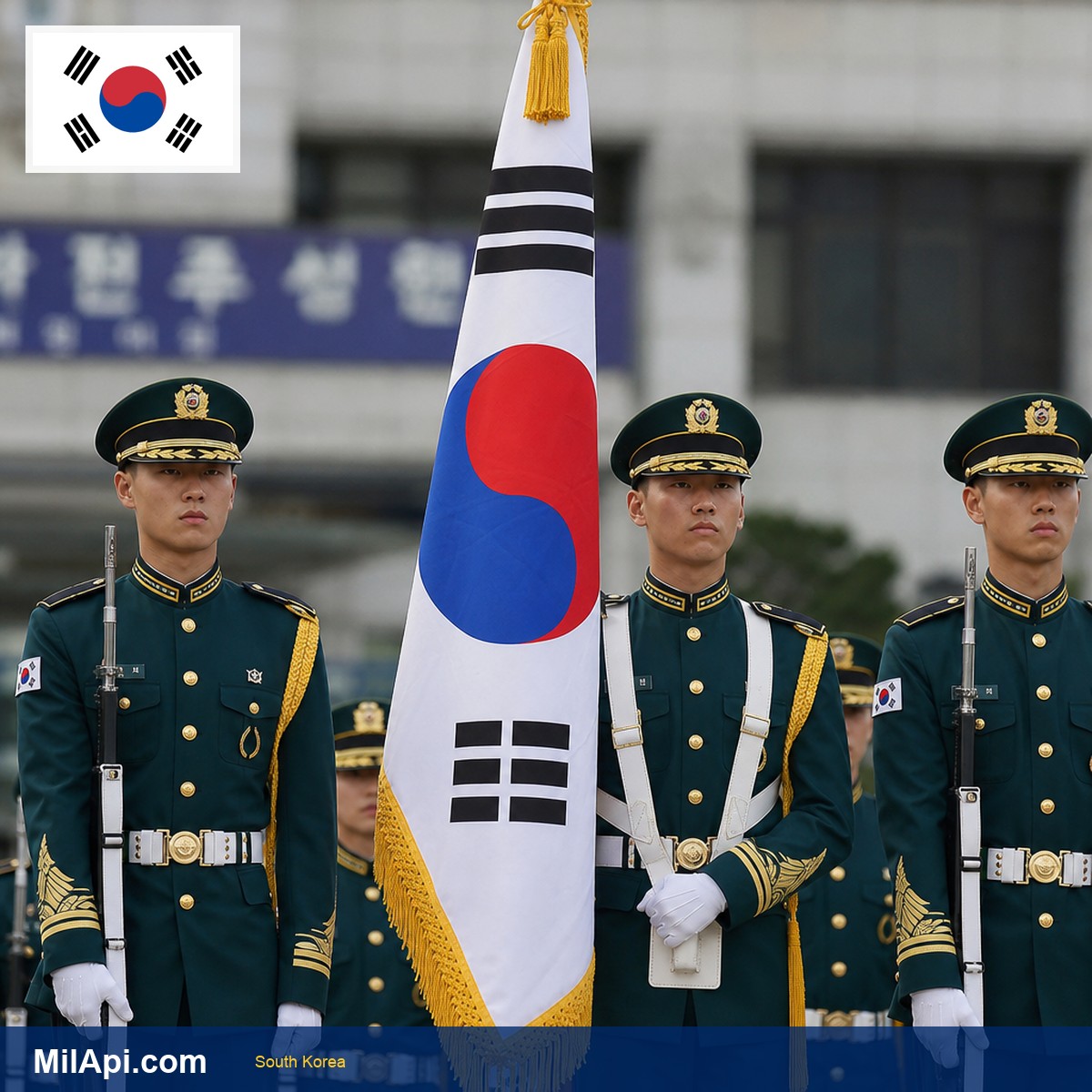
2026-03-08 · South Korea
South Korea’s Armed Forces — Size, Conscription, and Alliance Context
South Korea fields a large active force sustained by conscription, tightly coupled to alliance posture on the peninsula.
South Korea’s active armed forces typically rank among the world’s larger standing militaries in open compilations, supported by mandatory service that keeps a high readiness baseline relative to population. Large reserve pools further expand mobilization potential beyond peacetime active totals.
Conscription policy is therefore part of the force-size story. Changes to service length, exemptions, or demographic decline can move end strength even when threat perceptions stay constant. Analysts watching Korean force structure track both billet counts and the quality of training throughput.
Alliance context is inseparable from national numbers. Combined planning with the United States, presence of U.S. forces on the peninsula, and combined exercises mean that “South Korean force size” is often evaluated inside a bilateral framework rather than as an isolated stack. MilApi.com’s bases materials help illustrate how foreign and host-nation footprints interact.
Technologically, ROK forces invest heavily in artillery, air defense, missiles, and naval platforms suited to peninsula and near-seas scenarios. Headcount remains high by OECD standards, but qualitative modernization is the parallel narrative.
When ranking South Korea among the ten largest active forces, note conscription, reserve scale, and alliance integration. Timestamp every figure—personnel policies evolve.
Sources & disclaimers
Public estimates only. IISS-style yearbooks, Wikipedia aggregates, and government releases can disagree on definitions (active vs reserve, paramilitary inclusion). Always verify with primary publishers.
- Wikipedia: Republic of Korea Armed Forces (active/reserve estimates)
- Open reporting on conscription policy and service-length reforms
- Public U.S.–ROK alliance posture materials (unclassified)